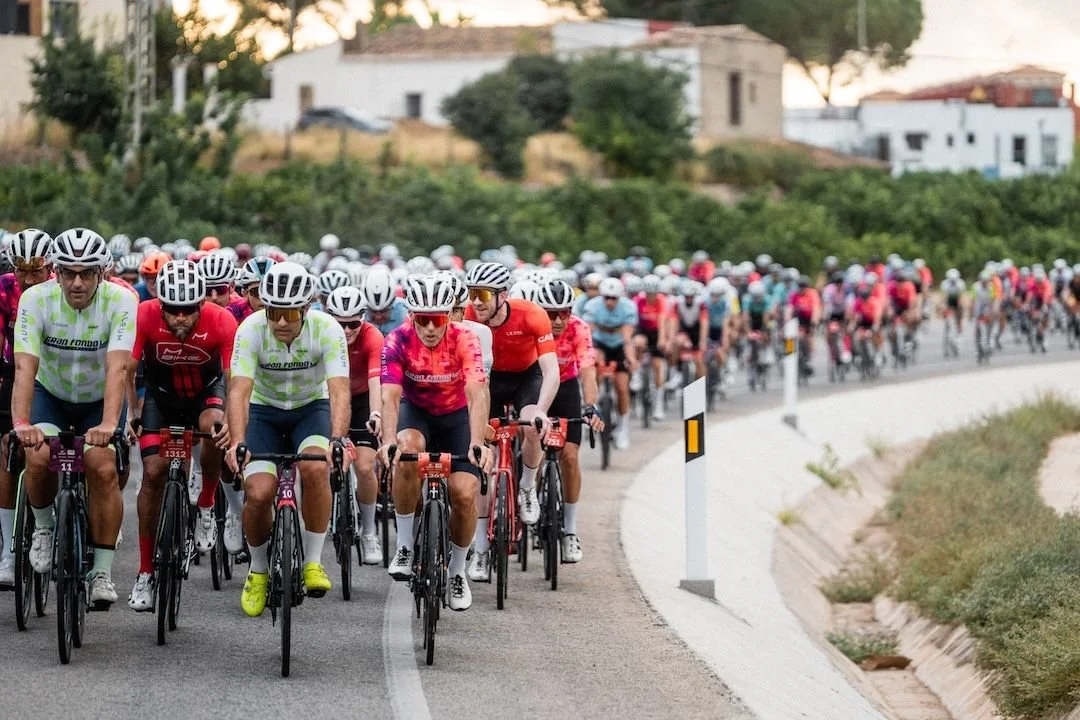
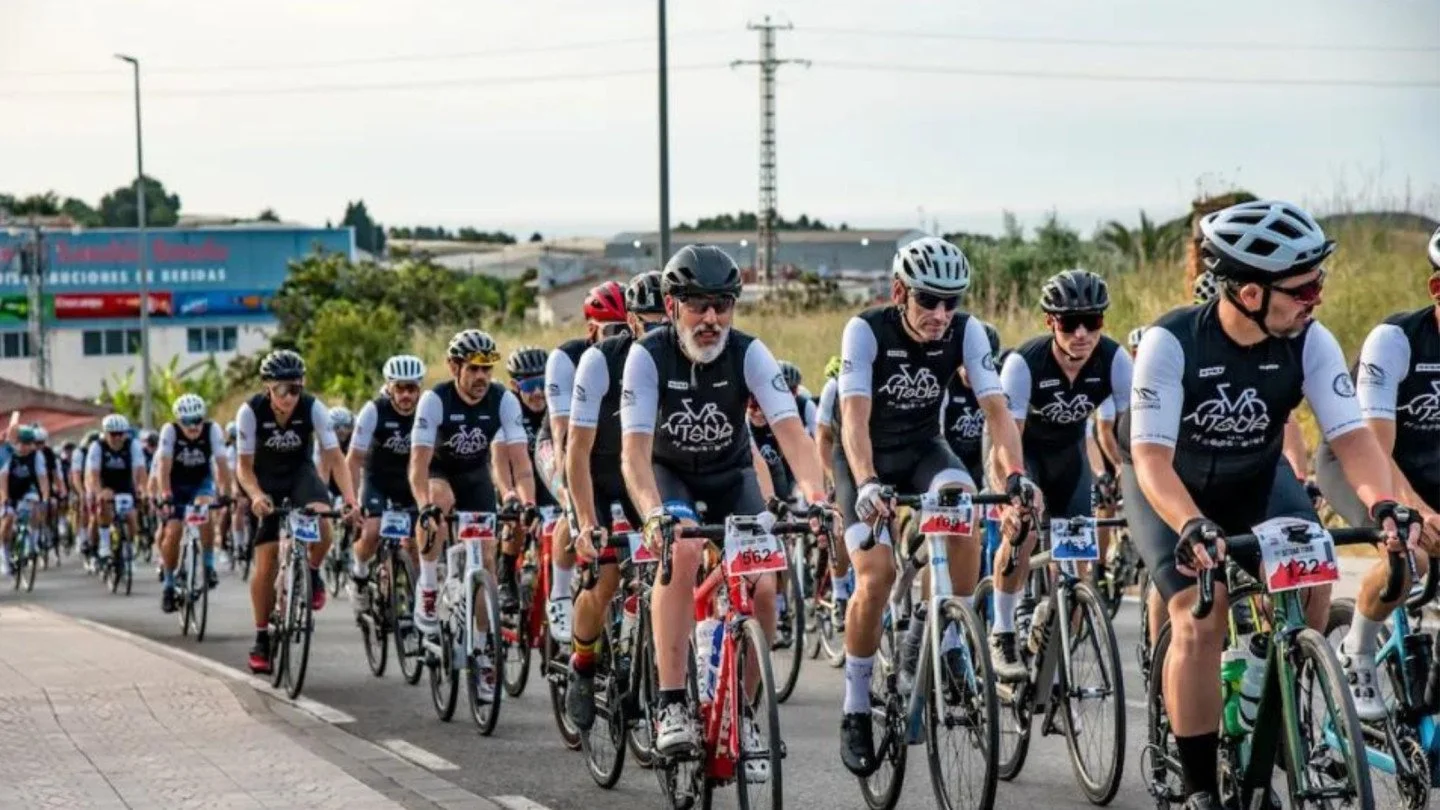
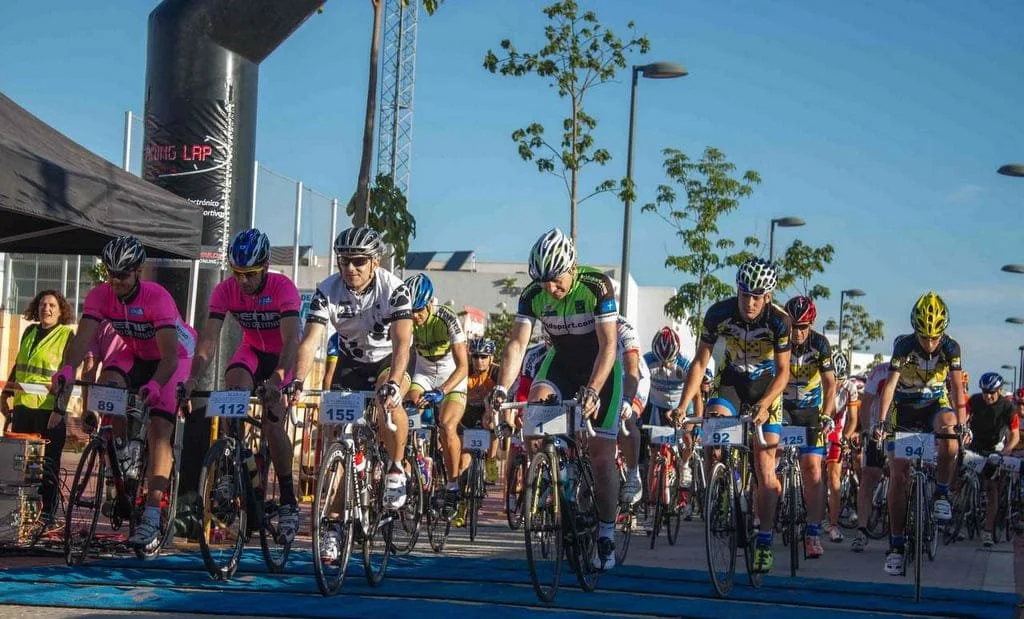
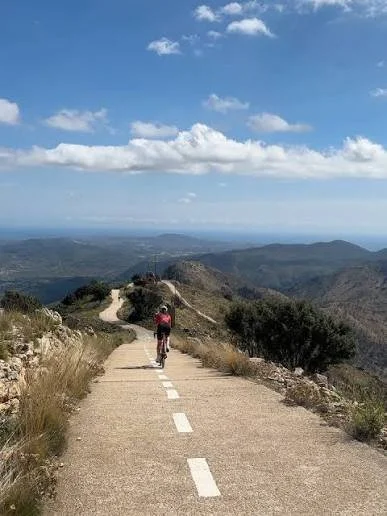
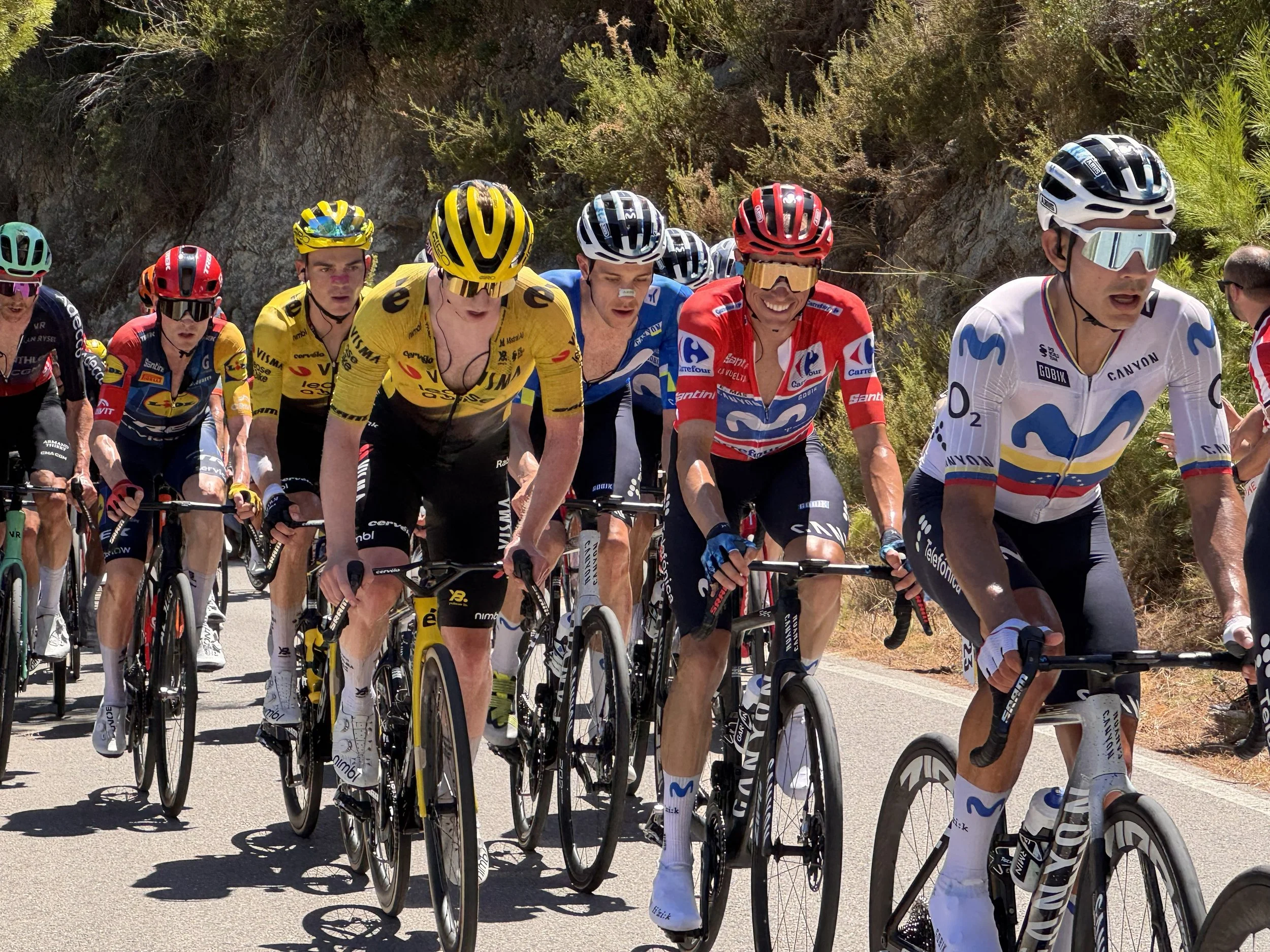
Bike routes for inspiration
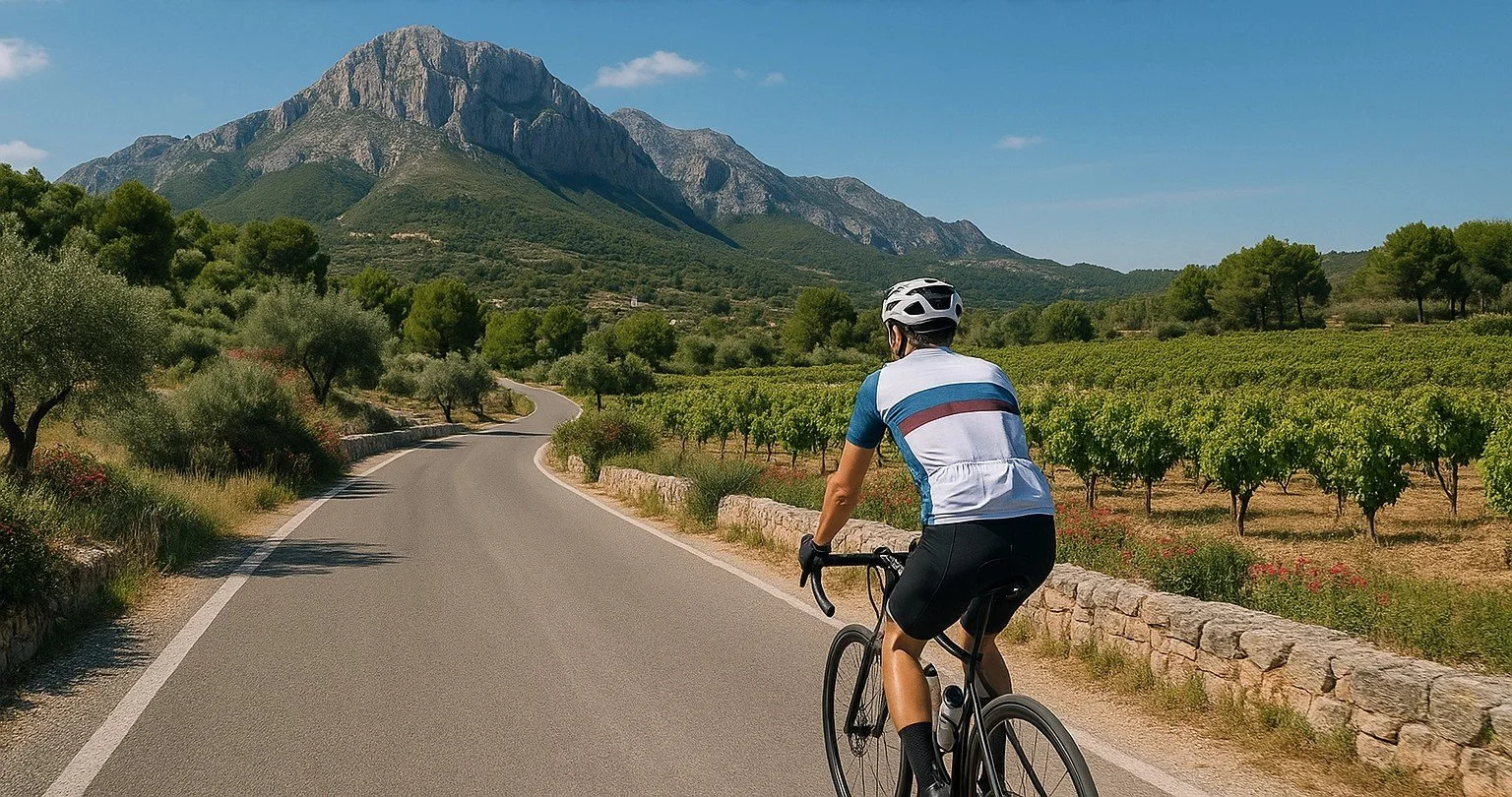
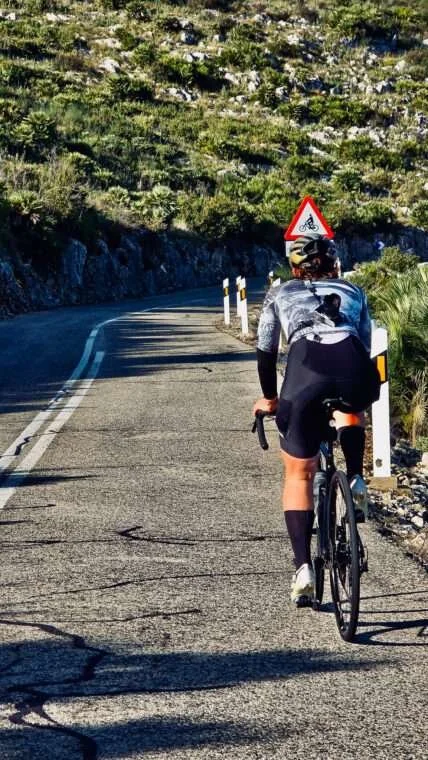
The region mid-way between Alicante and Valencia is blessed with kilometer-long beaches, rolling hills and steep mountains. The network of paved roads with little traffic are a cyclists dream. Add that to a climate that allows cycling year-round and cycling becomes the joy that it should be.
We have selected routes that we are sure you will enjoy. They are not only tested by us, but by many cycling enthusiasts throughout the years. Find out more below.
Depending on which hotel you stay at, the proposed routes may require transport to their starting point or an additional ride. We organize transport if you wish, or we assist in adapting the routes so you can ride directly from your hotel.
We know that the interest and capacity vary, even within a group of friends. For the ones that want an easier ride, e-bikes can be reserved. For the ones that do not want to ride, we can organize transport to an agreed lunch stop or a wine bodega, making sure everyone can participate in parts of the tour.
Because the stops along the way, for the view, a glass or food, is an integral part of the experience - as important as the ride itself.
The short and easy (15-25 km, minimal elevation, frequent stops)
-
![Two cyclists on a paved bike path with an orange grove in front]()
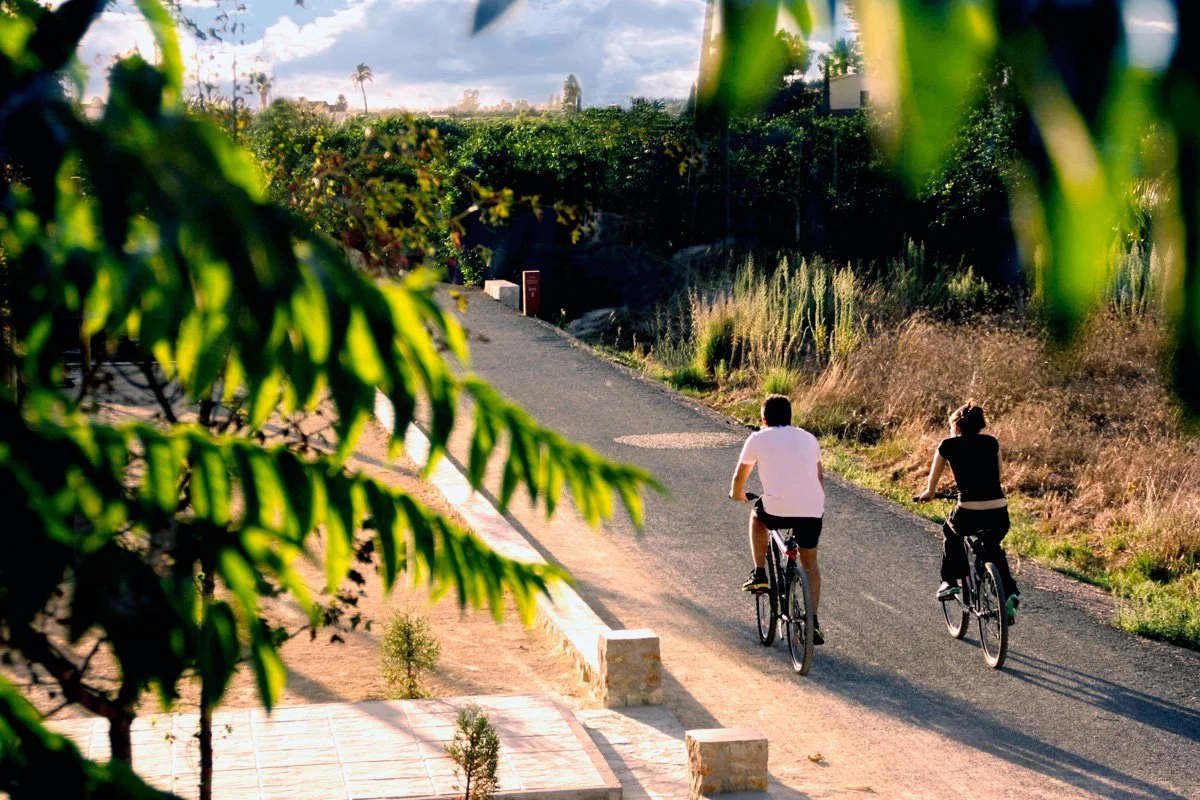
Dénia Via Verde - Orange Groves & Montgó
18 km · 84 m elevation gain.
An old railway line, gone quiet and green, carries you through citrus groves that scent the air long before you see them. The Montgó mountain massif stands watch the whole way — no traffic, no rush, just wheels on a soft path and the mountain keeping you company. A short ride that asks nothing more of you but to notice where you are.
The route passes 11 km from Oliva Nova, 6 km from Syncrosfera and Marriott La Sella
-
![Bikes parked on a beach with palm trees, sun umbrellas and the sea in the background]()
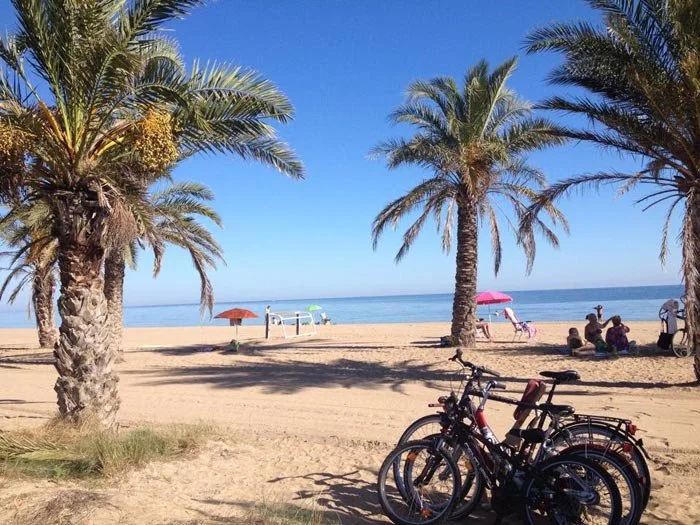
Las Marinas Seafront, Dénia
20 km · 110 m elevation gain
Flat, easy, and entirely yours — this is the ride for your first morning, when the legs are still finding their rhythm and the sea is close enough to hear. Pedal as far as you like, then let a beachfront terrace and a coffee talk you into staying a while longer.
-
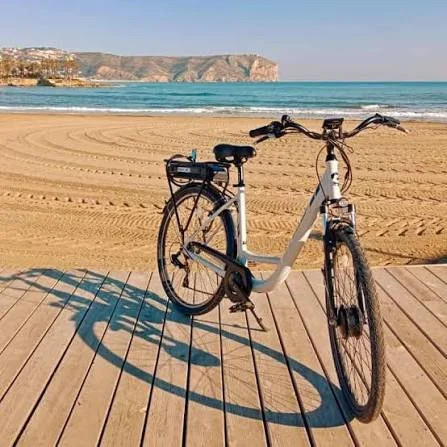
![A bike on a boardwalk in front of a beach and the sea with a mountain in the background]()
Jávea Old Town to Arenal
14 km · 107 m elevation gain
Cobblestones give way to open promenade, old town gives way to open sea — a short loop that lets you feel two very different Jáveas in one unhurried hour. Finish where the tapas plates are already arriving, because you'll have earned the appetite.
-
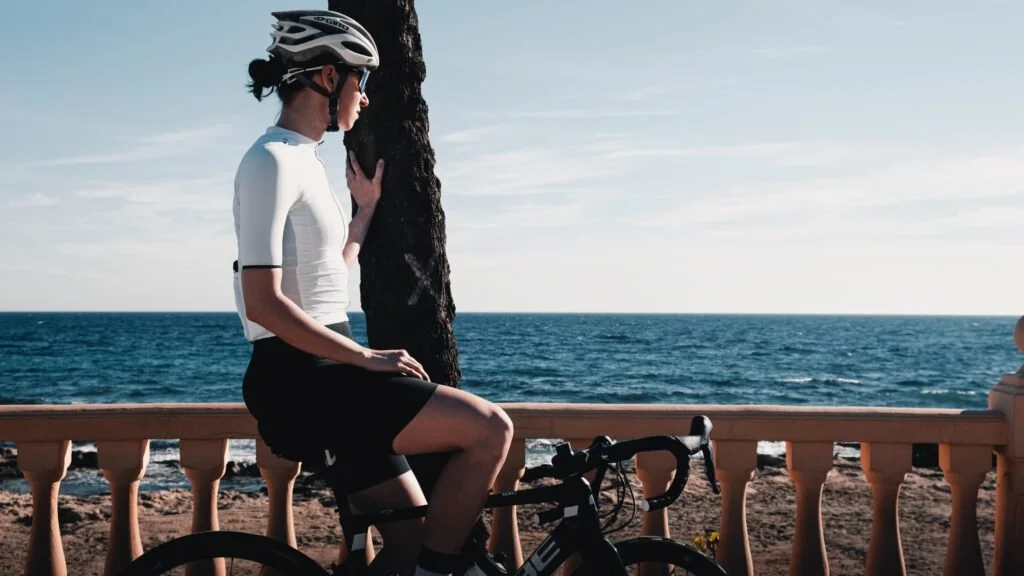
![A woman sitting on her bike leaning against a tree with the sea in the background]()
Morarira to Calpe
26 km · 339 m elevation gain
The Peñón de Ifach appears early and stays with you — a limestone giant guiding you along the coast without a few climbs to sweeten the view. A little further than the others and more elevation meters, but the road and the ocean view will yield dividend.
-
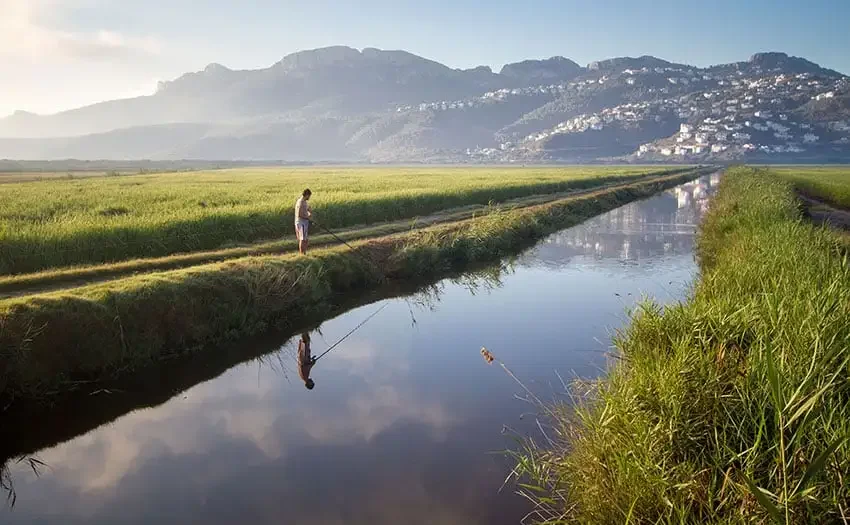
![A man fishing in a canal in the middle of rice fields with a mountain in the background]()
Pego Marshes & Rice Fields
25 km · 139 m elevation gain
Here the pace slows on its own. Rice paddies, reed beds, herons lifting off as you pass — this is Spain few visitors ever see, and it asks for nothing more than a gentle rhythm and an open eye. Lunch along the route, maybe with rice grown in the fields you just rode through?
-
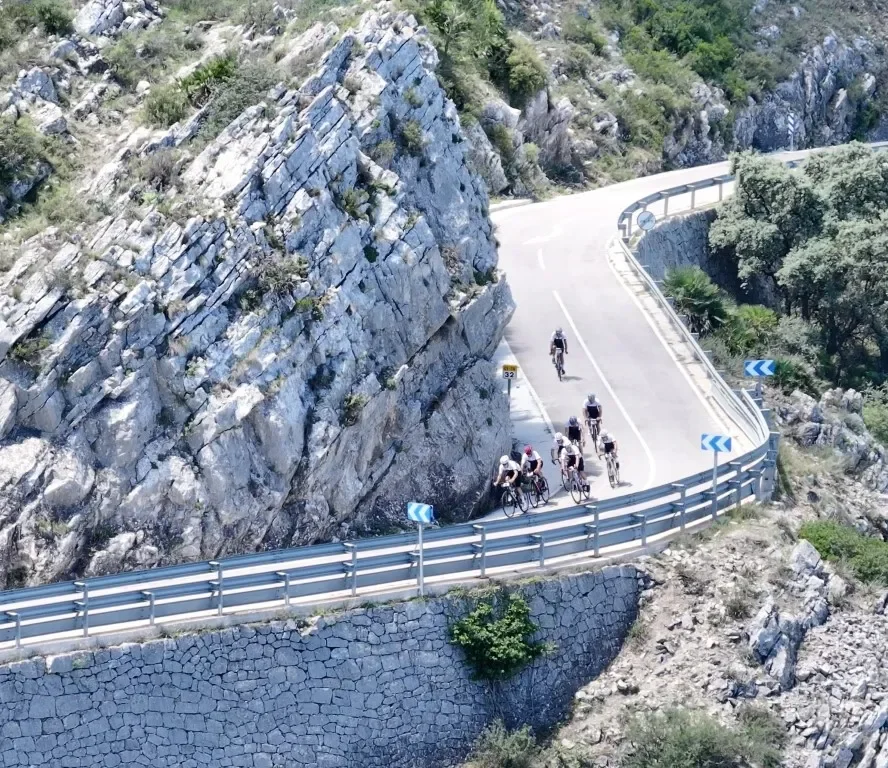
![Bike riders decending a curvy road in the mountains]()
Jalón Valley Amble
17 km · 228 m elevation gain
Vineyards and almond trees roll gently past on quiet lanes that seem to exist for exactly this kind of morning. The reward waits at the end: a bodega, a tasting, a table in the shade — the valley's way of saying thank you for coming.
-
![A road bike parked among orange trees with the sun and blues skies in the background]()
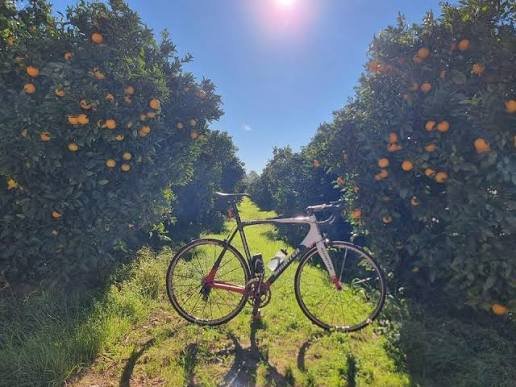
Pedreguer-Beniarbeig-La Xara loop
20 km · 149 m elevation gain
Orange trees for company, small villages for punctuation, and nowhere in particular to be. This is the ride for a slow Tuesday — easy enough to leave you energy for whatever the afternoon brings.
Leisurely Explorer (25-40 km, with attractions along the route)
-
![A woman cycling up a mountain road with dry landscape in the background]()
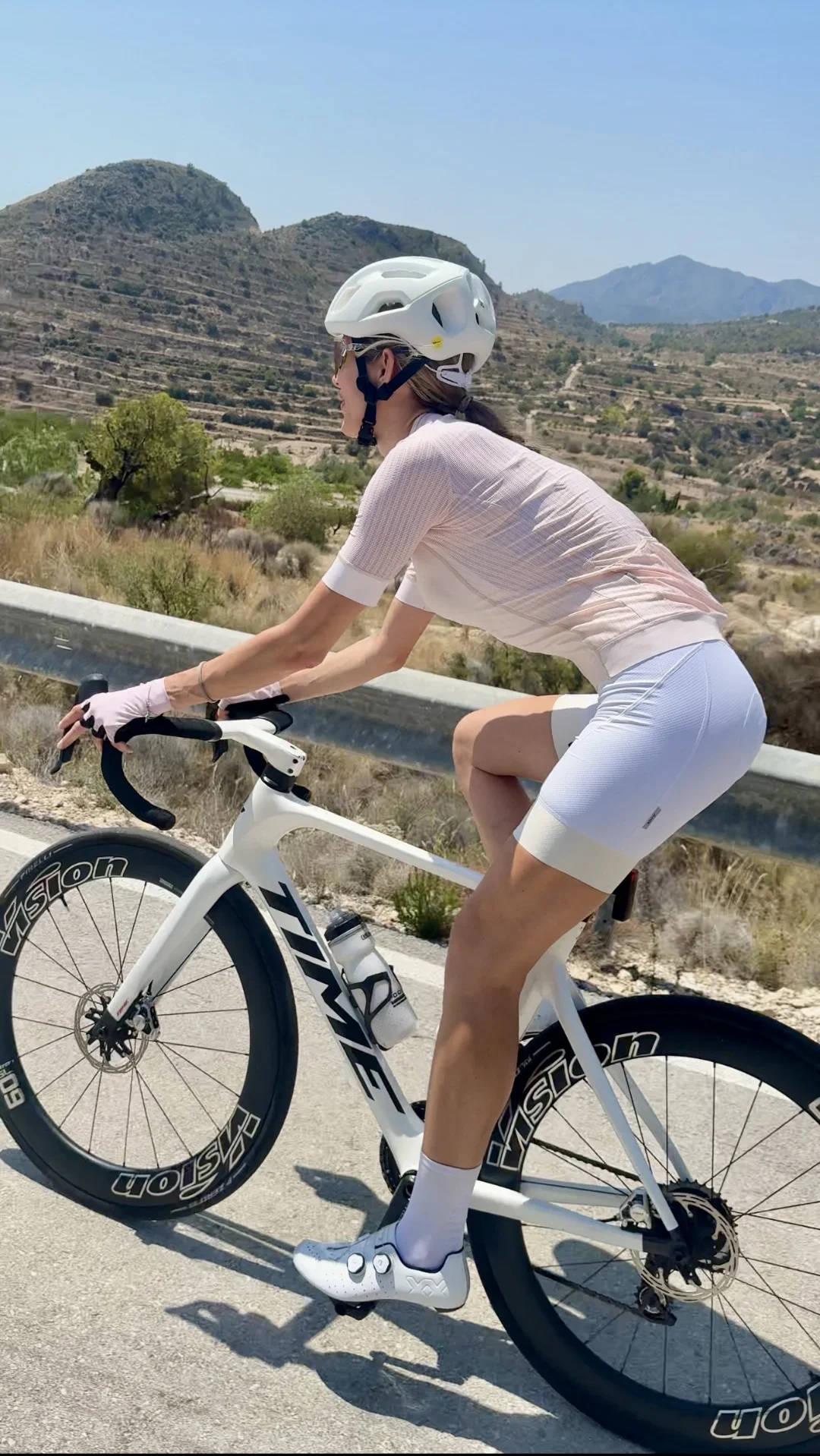
Xaló-Jesús Pobre-Gata de Gorgos
34 km · 471 m elevation gain.
If you like the slow and steady climbs, this route may be for you. There’s also a fun decent towards Pedreguer and mountain views as you pass Montgó and drop into Gata de Gorgos, a village that has worked wicker and esparto by hand for generations. Browse the workshops, then let the ride home feel like a bonus.
The route passes next to Syncrosfera and Dénia Marriott La Sella hotels
-
![Eight bike riders ascending a paved and curvy road with the sea and mountains in the background]()
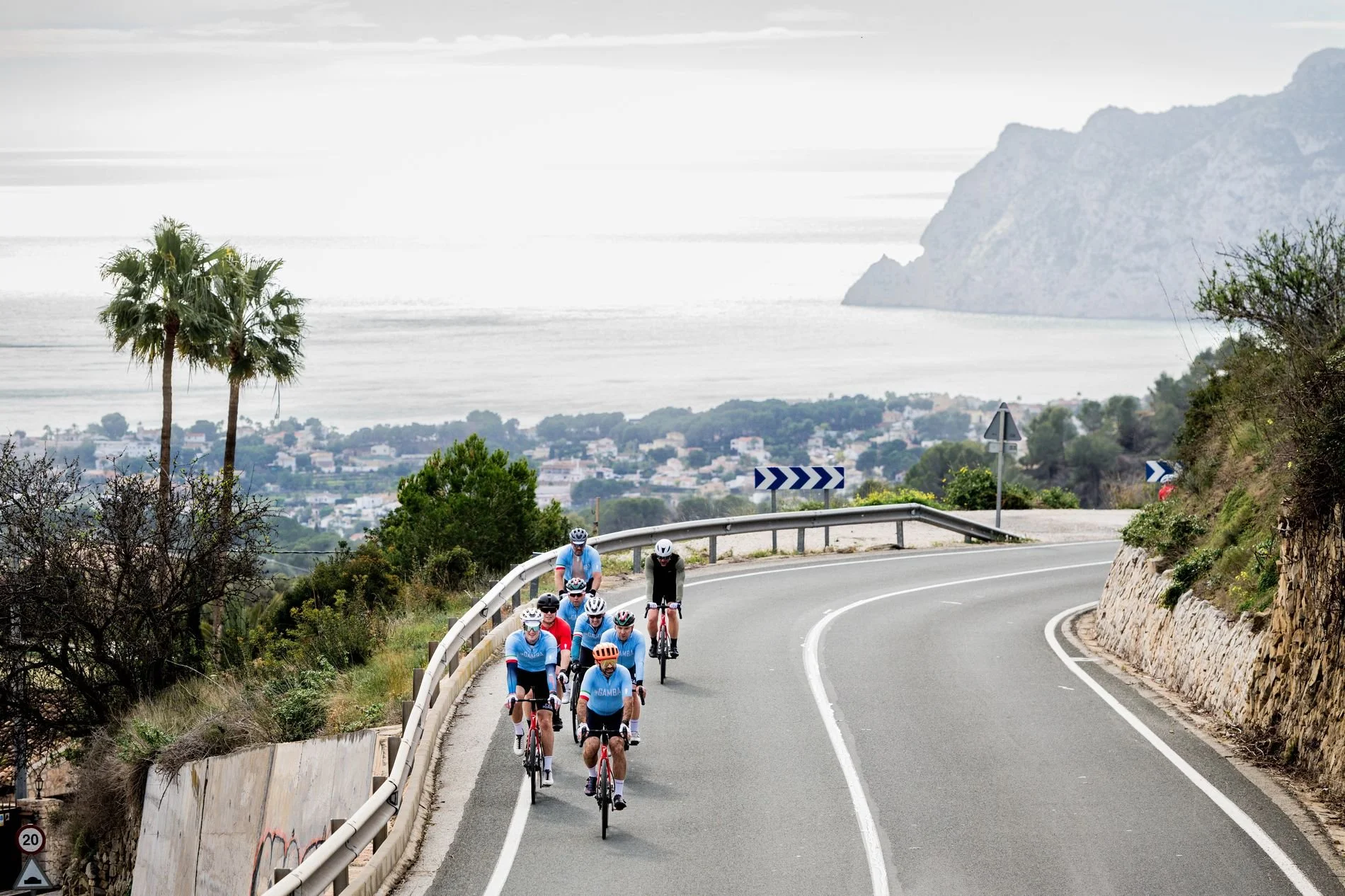
Benissa's Hilltop Old Town Loop
28 km · 481 m elevation gain
Benissa rises above the coast like it's in no hurry to be found — narrow streets, a cathedral-sized church for a town this small, and views back to the sea that make the significant climb from Calpe back up feel like a fair trade. Lunch and coffee in the old square is a well-earned prize.
-
![Two bike riders cycling on a paved road in a forest]()
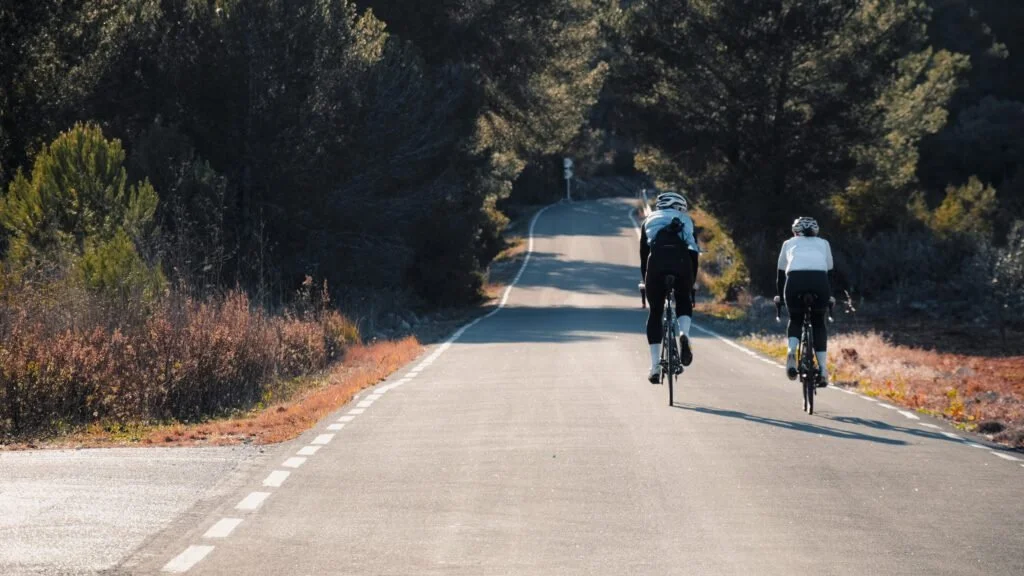
Benitatxell–Moraira–Teulada Headland
28km · 438m elevation gain.
Straight from the doorstep of Dionís Hotel Boutique, this loop rolls through some of the Marina Alta's most photogenic headland country. Benitachell opens the ride with rolling farmland and sea glimpses; Moraira answers with its harbour calm before the road turns inland toward Teulada's quiet vineyard lanes. Just enough climbing to feel earned, never enough to feel like hard work — and you're back at the hotel in time for lunch on the terrace.
-
![A man riding a bike on a paved road among grapewines with a mountain and blue skies in the background]()
Xaló Valley Wine Villages — Alcalalí & Lliber
35km · 449m elevation gain
Starting in Alcalalí's vineyard country, this loop threads through the quiet villages that give the Marina Alta its character — Benigembla and Murla first, tucked into folds of almond and olive terraces, then Llíber and Benissa's hilltop charm before Xaló brings you home through its namesake wine valley. A little more distance than a morning amble, but the terrain stays gentle throughout — six villages, one valley, and roads quiet enough to hear the church bells from the last one before you arrive.
-
![A bike rider cycling on a paved road among grapewines with the sunrise among clouds in the background]()
Syncrosfera, Orba & Benigembla Countryside Loop
38km · 530m elevation gain
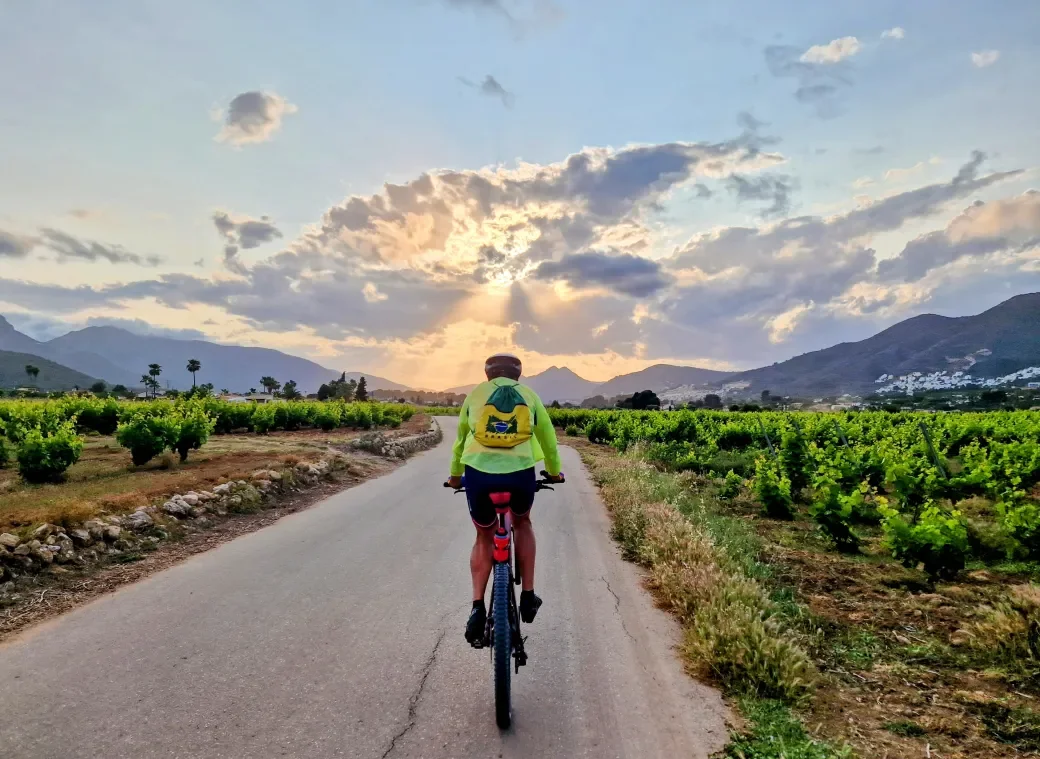
Starting near Pedreguer, this loop climbs gently inland toward Orba's orchard-lined lanes before Benigembla and Alcalalí unfold the Xaló valley's quieter side — vineyards on one shoulder, almond terraces on the other, and hardly another rider in sight. A touch longer and a shade more climbing than its neighbouring loops, but nothing here demands more than a steady rhythm. The kind of ride that rewards curiosity as much as fitness.
-
![A bike rider ascending a paved road towards a curve]()
Oliva Nova-Monte Pego & the Girona River loop
40.9km · 310m elevation gain
Setting out from Oliva Nova, this loop stays gentle where the others climb — a longer distance, but the flattest profile of the bunch, tracing the Girona river through Benimeli, Beniarbeig, Pedreguer and El Verger. Orange groves and quiet farm roads carry you through villages that rarely see a tour bus, at a pace that leaves plenty in the legs for the ride home. A gentle-terrain counterpart to the valley climbs further inland — ideal for a longer day without the vertical.
This route passes next to Oliva Nova and Syncrosfera hotels, near Dénia Marriott La Sella
-
![A view of bike handlebars and a long shadow of the cyclist projected on a paved road with a mountain in the background]()
Montgó Loop
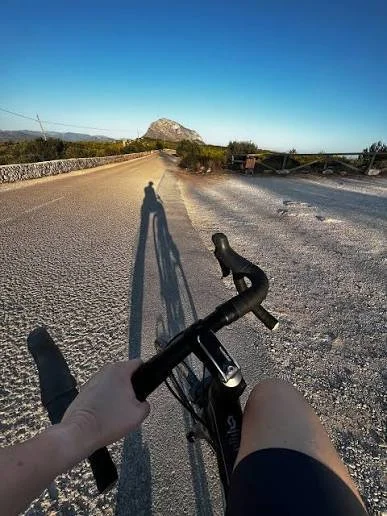
31.6km · 436m elevation gain
This loop circles the Montgó massif — the limestone mountain that watches over Dénia and Jávea alike. The road dips through Jesús Pobre's orange groves before opening onto Dénia's coastline, then climbs gently back through Jávea's countryside with Montgó rising on your shoulder the whole way. A proper sampler of the Marina Alta in one loop — mountain, coast, and village life, with just enough climbing to make the coffee at the end taste earned.
Coastal and Countryside Classics (40-60 km, moderate elevation)
-
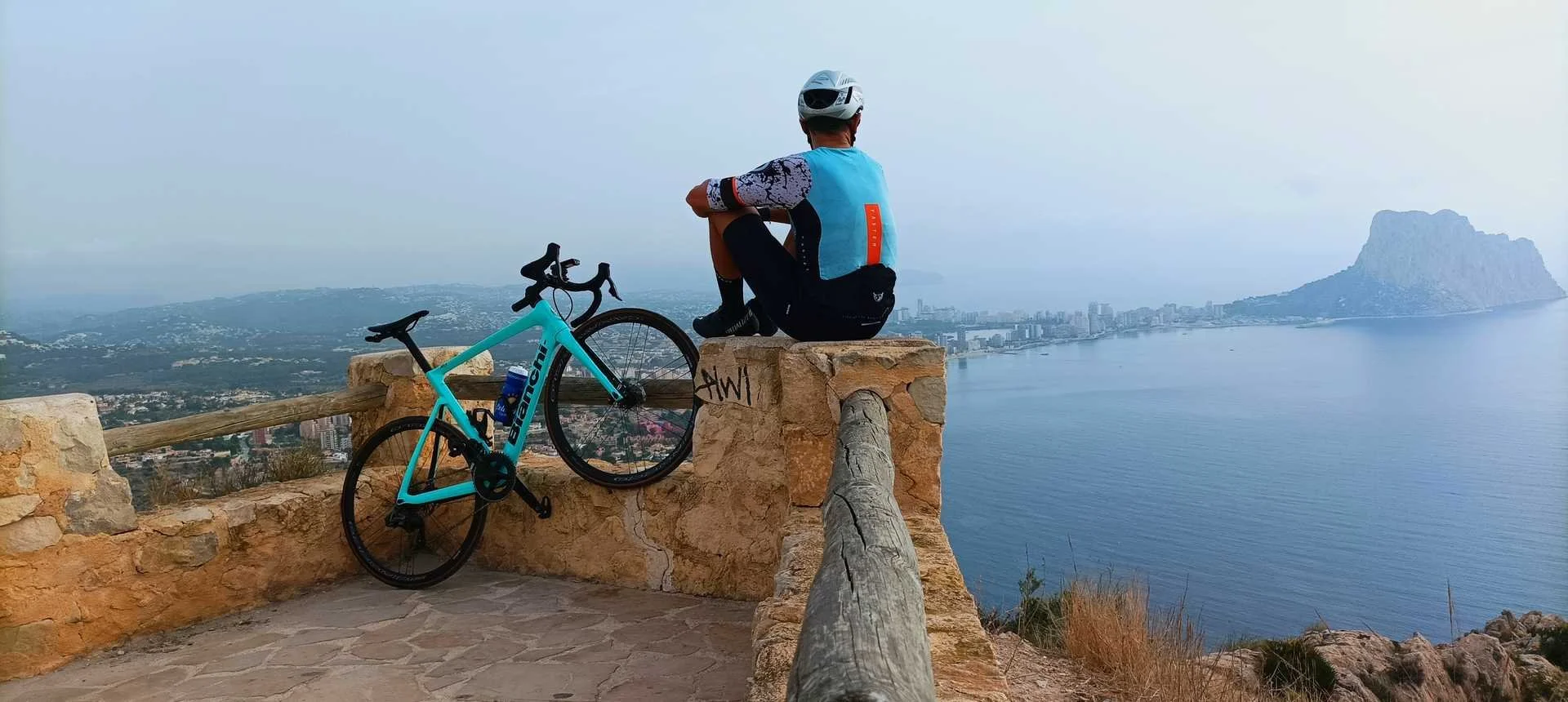
![A man sitting on a stone fence beside his bicycle looking down towards a city and the sea in the distance]()
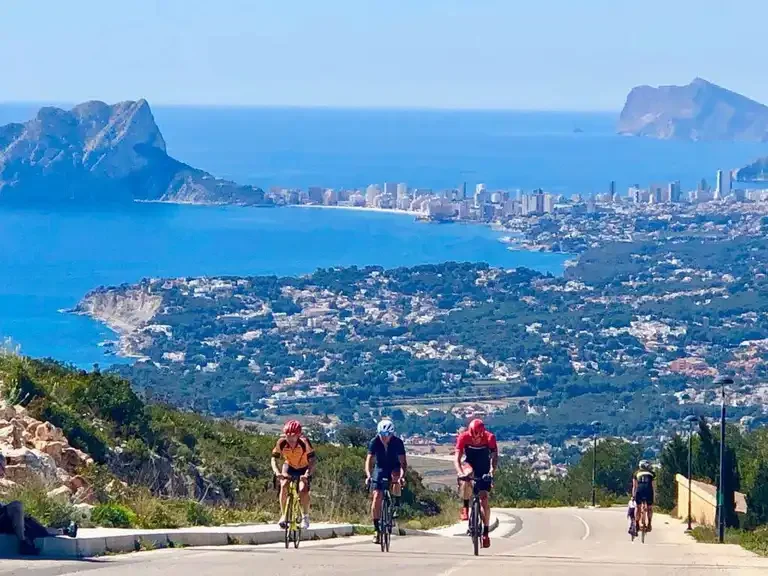
Coll de Rates from La Sella
58km · 1,171m elevation gain
Starting from the Marriott La Sella, this route heads inland through Orba's orchard country before the road begins its real work — climbing steadily toward the Coll de Rates, one of Marina Alta's most celebrated passes. For those with the legs and the curiosity, an optional detour continues to the old watchtower above the col, adding an extra reward albeit for quite an extra effort, because the last ramps are truly steep. The return threads back through Alcalalí's vineyard lanes, closing a loop that moves from resort comfort to mountain pass and back again in a single, satisfying day.
-
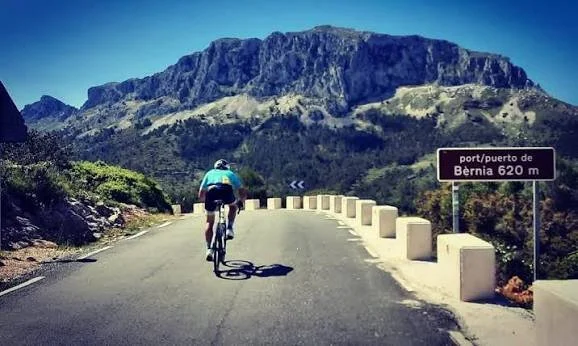
![A man cycling on a paved road starting the descent from Sierra de Bernia with the mountain in the background]()
Sierra de Bernia Loop
62.4km · 996m elevation gain
Leaving the Marriott La Sella, the road eases you in gently through Jesús Pobre and on to Gata de Gorgos, the wicker-working village that's been a fixture of these valleys for generations. From there, Xaló opens onto vineyard country before the route turns to its real purpose — a full circuit of the Sierra de Bernia, the limestone ridge that dominates the skyline for miles around. Senija brings you back toward the coast before retracing the outbound road home, a long day that trades one famous pass for an entire mountain, circled in full.
-
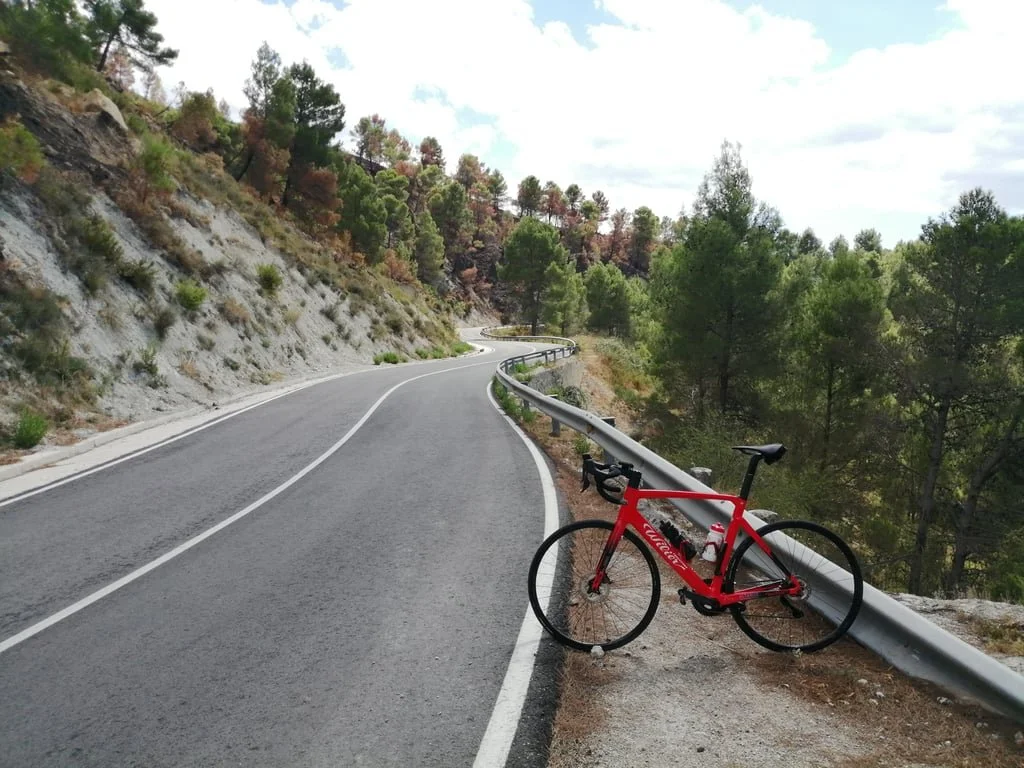
![A red road bike parked on the side of a paved road winding up a valley]()
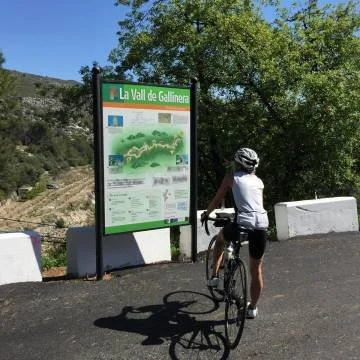
Vall de Gallinera — The Valley of a Thousand Cherry Trees
58.2km · 729m elevation gain
From Oliva Nova, the road runs inland and gently upward toward Forna, the gateway into the Vall de Gallinera — the Valley of a Thousand Cherry Trees, eight villages strung along a single quiet road with almost no traffic to share it. The climb continues to Alpatró, where we turn around and head home through Pego, trading orchard terraces for rice fields and wetland light on the way back to the coast. A long, unhurried day that spends most of its time somewhere few visitors ever think to look.
-
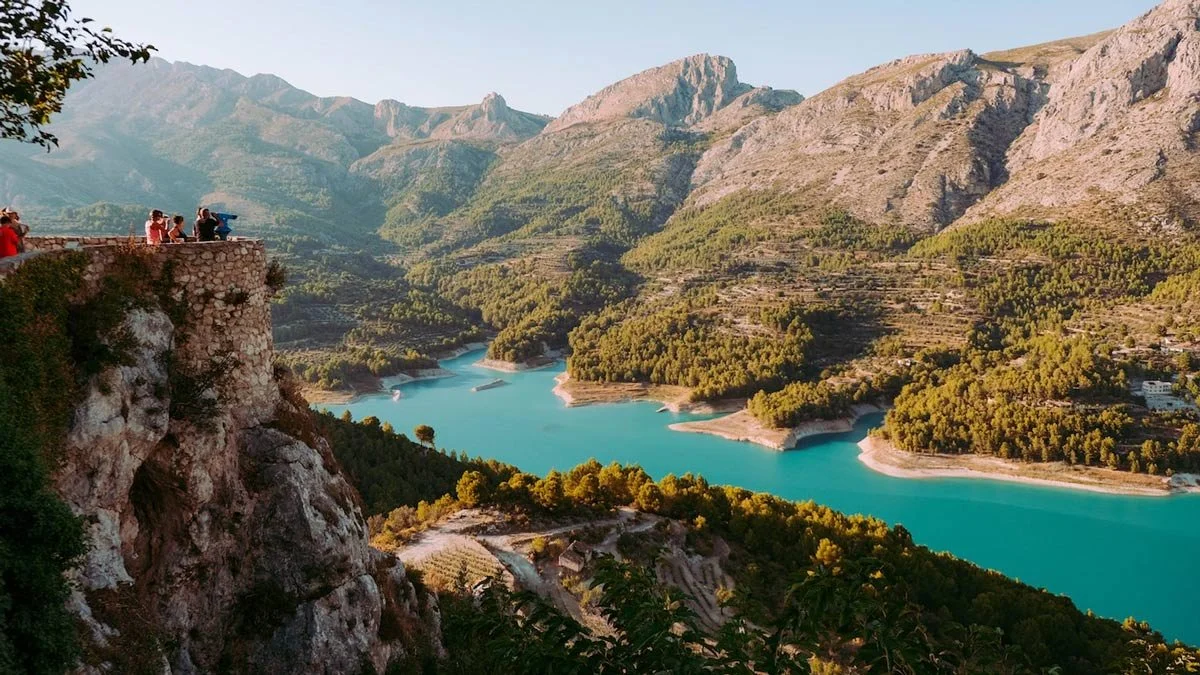
![A turquoise lake at the bottom of the valley with a castle in front and mountains behind]()
Guadalest — The Eagle's Nest - from Altea
41.4km · 866m elevation gain
The ride leaves Altea's white-domed old town and climbs steadily inland through Callosa d'en Sarrià, the valley narrowing as the road rises toward Guadalest — its castle and turquoise reservoir waiting at the top like a reward earned one switchback at a time. The return sweeps through La Nucía before dropping back to the coast, finishing where it began: the old church square in Altea, with its whitewashed streets and blue-domed skyline to mark the end of a proper mountain day.
-
![En syklist sykler på en svingete vei omgitt av grønne trær og fjell under en blå himmel med noen skyer.]()
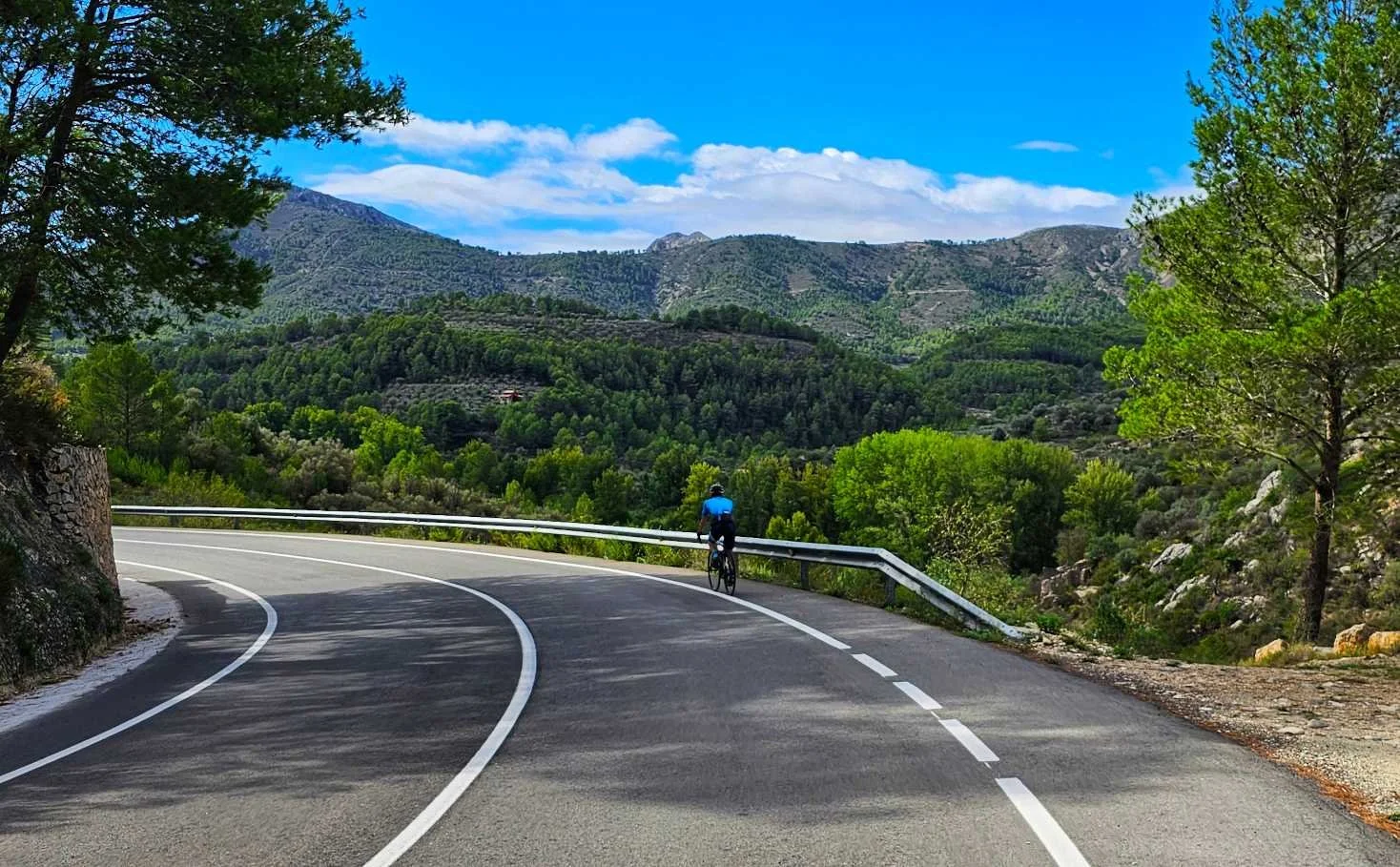
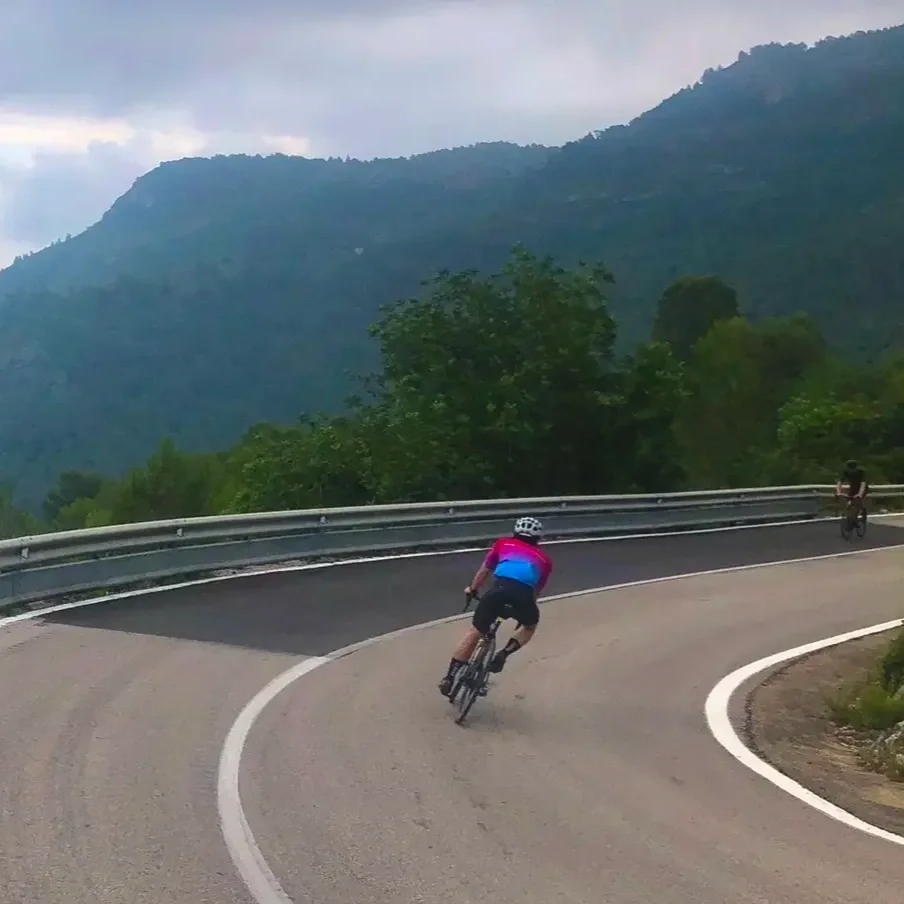
Castell de Castells & Tarbena Loop from Parcent
40.4km · 805m elevation gain
Out of Parcent, the road climbs through Benigembla's terraced hillsides toward Castell de Castells — a village that feels like it was set aside from the passage of time, ringed by pine forest and almond groves. The return climbs again, this time toward Tárbena, before dropping back through the valley to Parcent. Two proper climbs, two villages that reward the effort of reaching them, and a loop that captures the quieter, wilder side of the Marina Alta's interior.
-
![Two men cycling on a paved road through orange groves with forests and a quarry in the background]()
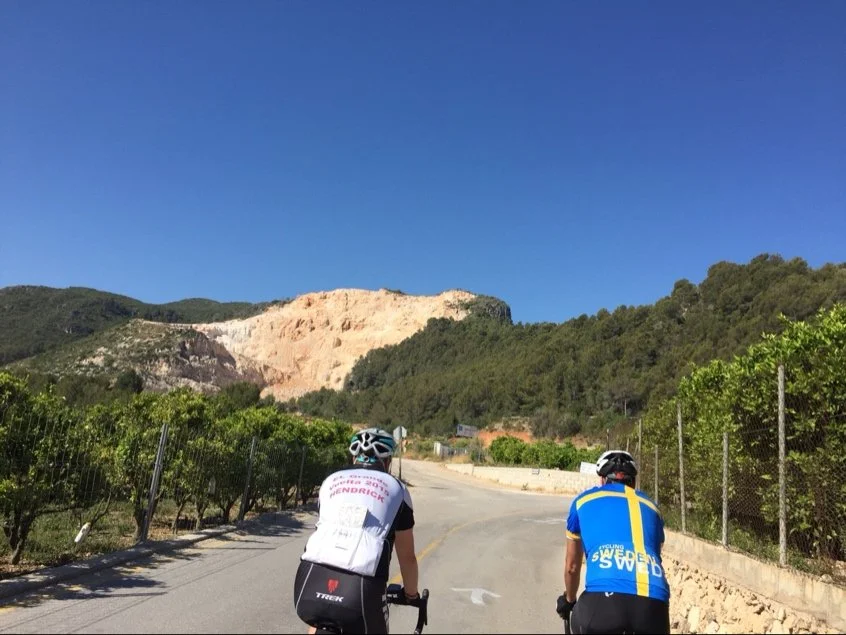
Forna and Sagra from Oliva Nova
50.1km · 507m elevation gain
From Oliva Nova, the road heads inland to Forna, at the mouth of the Vall de Gallinera, before turning south through Pego's rice fields and wetlands. From there the route climbs gently toward Sagra, one of the Marina Alta's quieter valley villages, before El Verger brings you back toward the coast and home. A ride that samples a bit of everything — valley, wetland, and village — with just enough elevation to keep it interesting without ever turning demanding.
-
![A bike parked on a roadside overlooking a mountaineous valley with the sea in the background]()
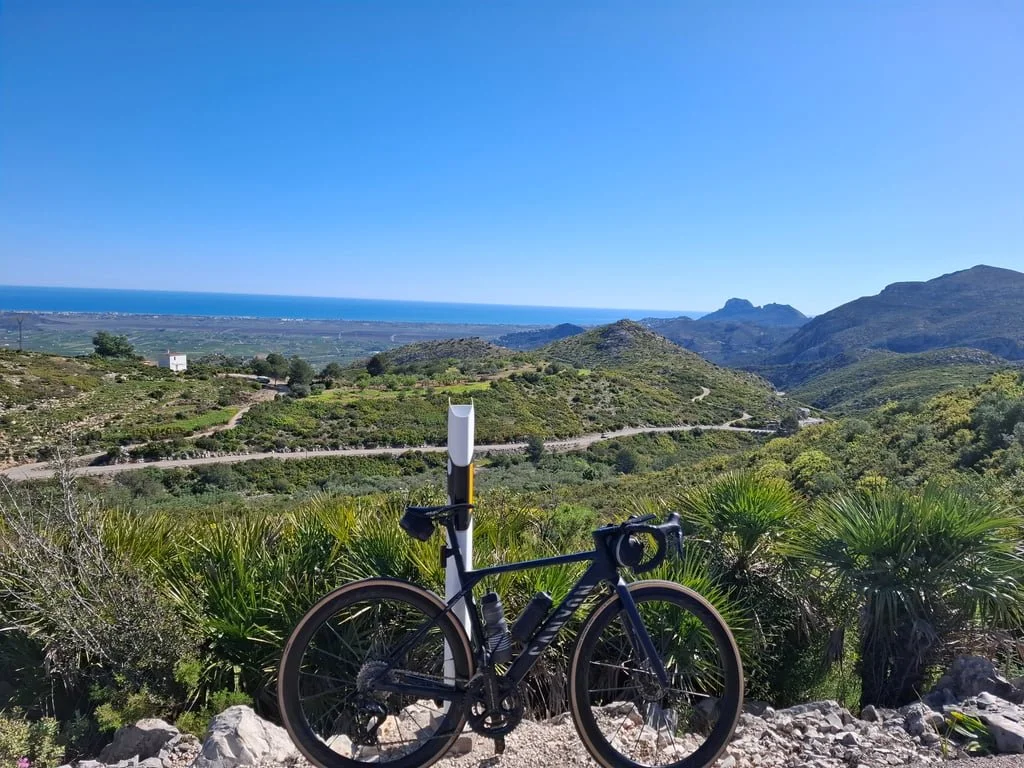
Vall d'Ebo from Oliva Nova
57.8km · 1,035m elevation gain
From Oliva Nova, the road runs through Pego before climbing into the quiet, almond-terraced folds of the Vall d'Ebo — one of the Marina Alta's least-visited valleys. Rather than retrace the outbound road, the return climbs again over the Coll de la Font/El Miserat pass, a proper second act that turns this from a there-and-back into a full mountain circuit, before dropping through Pego once more on the way home. Two climbs, one remote valley, and a genuine sense of having crossed real terrain by the time the hotel comes back into view.
Mountain Passes & Panoramas (60-90 km, stretches of sustained climbing)
-
![A bike parked in front of the mountain pass sign of Port La Carrasqueta]()
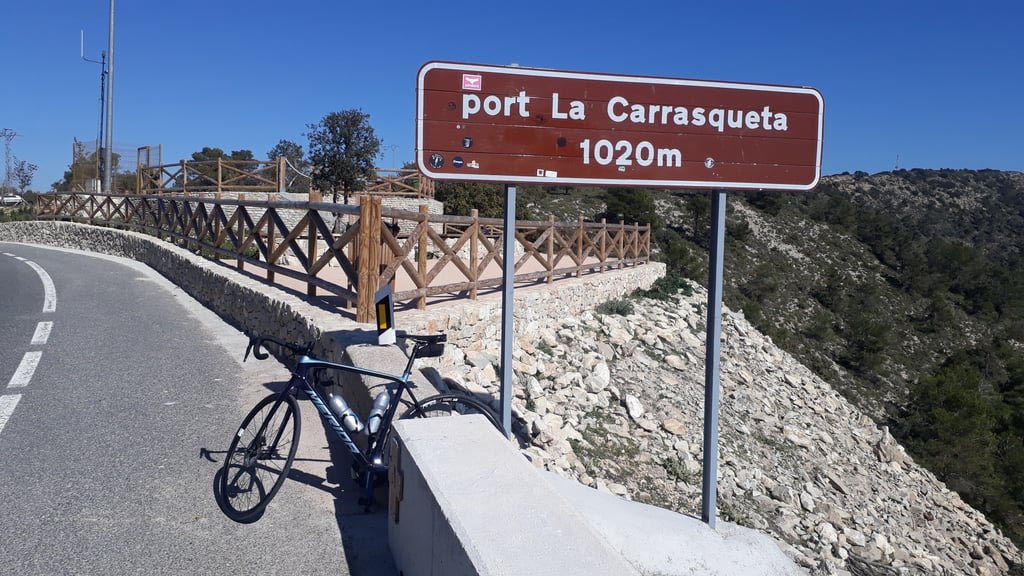
Puerto de la Carrasqueta from Benilloba
66.4km · 1,400m elevation gain
From the quiet village of Benilloba, the road climbs early toward the Puerto de la Carrasqueta — the long, patient ascent that has built winter fitness for generations of professional teams training on this coast. A descent brings brief respite before the second act: the Puerto de Benifallim, no less demanding for coming second, its cherry and almond groves offering some of the finest scenery on the return leg. Benasau closes the loop, delivering you back to Benilloba having crossed two of the region's most respected passes in a single, honest day.
-
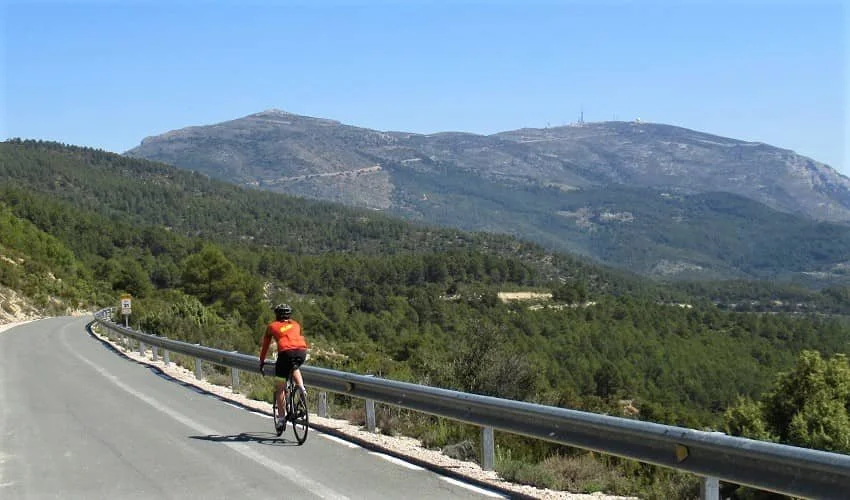
![a cyclist on a paved road with a forest and a mountain with antennas in the background]()
Port de Tudons from Guadalest
81.8km · 1,827m elevation gain
From Guadalest's castle and turquoise reservoir, the road climbs toward the Port de Tudons — one of the region's Vuelta-proven passes, quieter and less photographed than its famous neighbours but every bit as demanding underfoot. The descent drops you toward Finestrat, at the foot of Puigcampana, before Callosa d'en Sarrià carries you back through the valley for the return to Guadalest. Two real climbs and a full circuit of some of the Marina Alta's finest mountain scenery — a proper day out for riders who've already found their legs on the shorter passes.
-
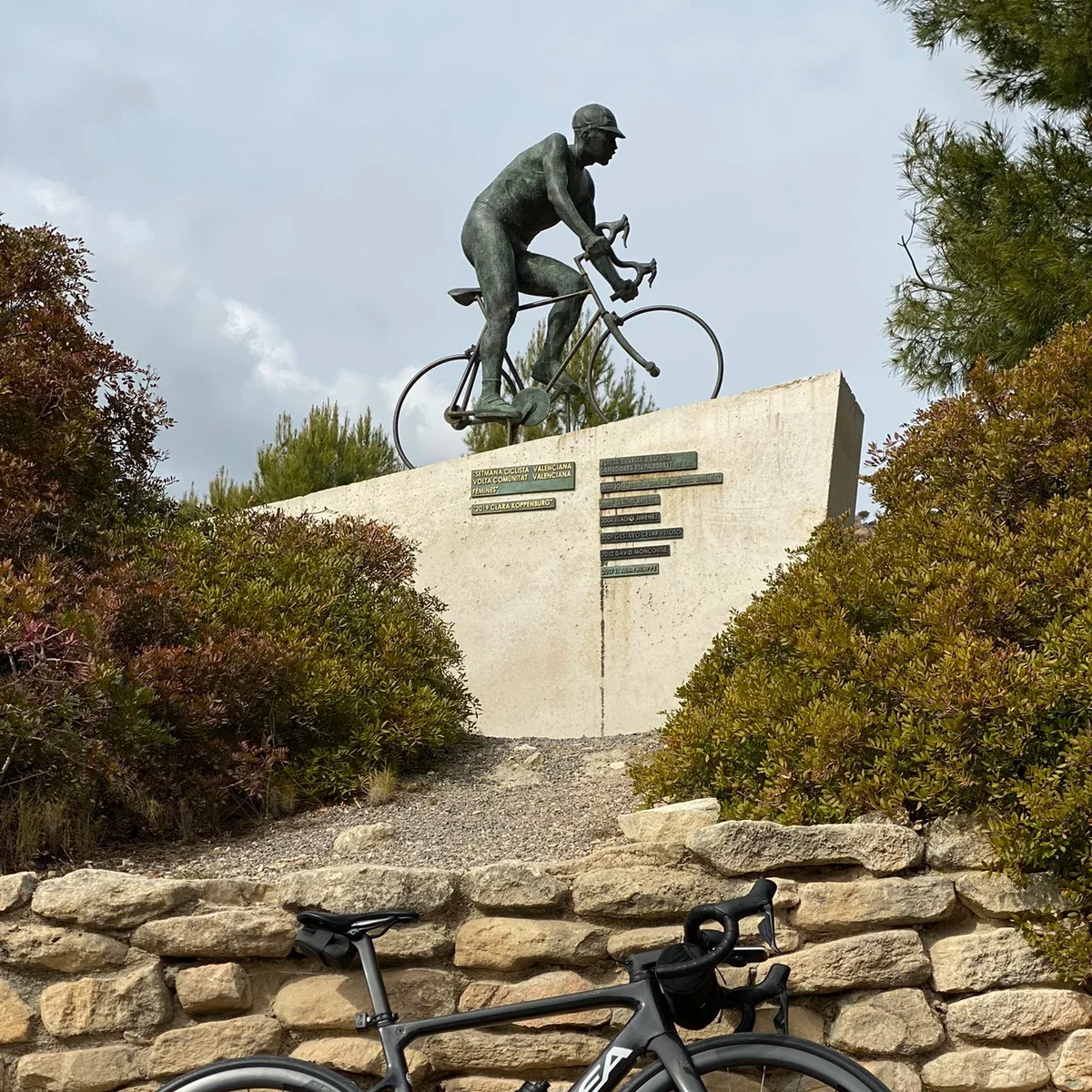
![A statue of a cyclist on top of a cement base among trees]()
Xixona, Alcoy, Xorret de Catí loop
84.7km · 1,914m elevation gain
Xixona — famous the world over for its turrón — sends riders inland toward Alcoy, the city whose surrounding mountains have shaped generations of local climbers before the road turns to face its real test. The Xorret de Catí needs no introduction to anyone who's followed the Vuelta a España: a category-one wall averaging over 11%, with ramps that push well past 20% in its closing kilometres. The loop closes back through Xixona, leaving riders having ridden one of Spanish cycling's most storied climbs in a single demanding day.
-
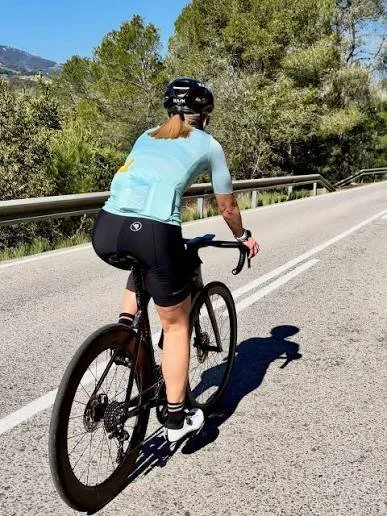
![A woman in a turquoise shirt and black short cycling on a paved road]()
Port de Benifallim from Guadalest, out and back
63.2km · 1,475m elevation gain
Guadalest's castle and reservoir mark the start of this out-and-back to the Port de Benifallim — a steady, rhythmic climb through cherry and almond groves, with Aitana and Puigcampana rising ahead as constant company. The descent home is one of the region's finest: fast, flowing, and entirely earned after the effort of getting there. A there-and-back that doesn't need a loop to feel complete — the climb and its scenery are reward enough on their own.
-
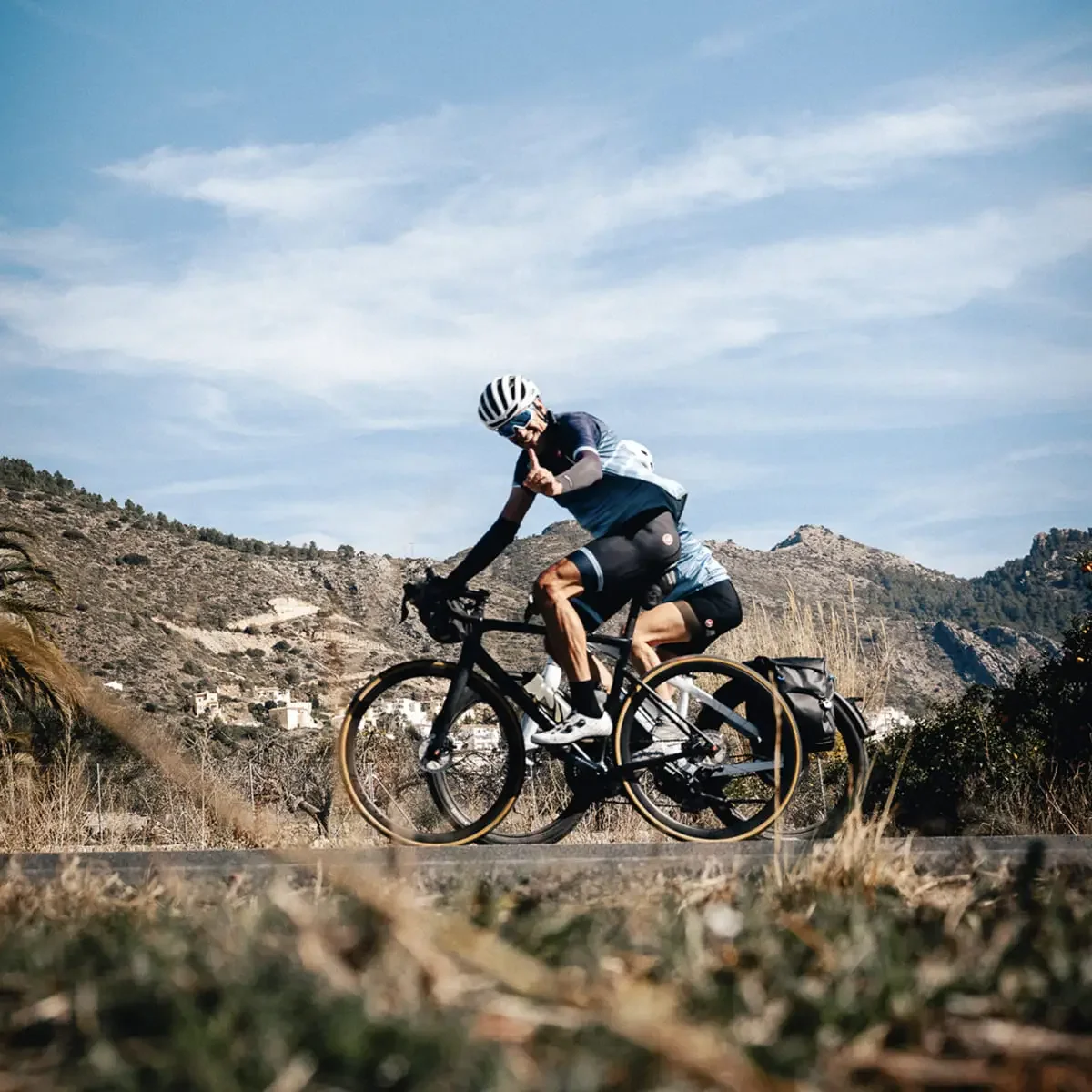
![A cyclist on a roadbike giving thumbs up with a mountain in the background]()
Guadalest, Castell de Castells and Confrides loop
86.3km · 1,839m elevation gain
From Guadalest, the road drops through Callosa d'en Sarrià before climbing again toward Castell de Castells — a village set apart by pine forest and almond terraces, remote enough to feel like a genuine discovery. Balones follows, a small waypoint on the way to the day's real challenge: the Port de Confrides, a proper mountain pass that closes the loop with real elevation and real reward. Two significant climbs, three of the Marina Alta's most characterful villages, and a full circuit back to Guadalest's castle and reservoir to finish.
-
![A cyclist studying an area map of Vall de Gallinera]()
Vall de Gallinera and Vall d'Ebo loop
87.0km · 1,417m elevation gain
From Oliva Nova, the road climbs inland through Forna and into the Vall de Gallinera — the Valley of a Thousand Cherry Trees, eight quiet villages strung along a single road. Rather than retracing the outbound climb, the route crosses into the neighbouring Vall d'Ebo, a valley of its own quiet character, before dropping through Pego's rice fields and wetlands. Sagra and Monte Pego close out the return, tracing a long, unhurried arc back to the coast — two valleys, real distance, and a day spent almost entirely somewhere few visitors think to look.
-
![A professional cyclist rejoices after crossing the finish line at Aitana mountain first]()
The Alcoy Grand Loop — Carrasqueta, Confrides & Aitana
96.5km · 2,355m elevation gain
This is the Marina Alta's grand tour, three legendary passes strung into a single, unrelenting day. From Benifallim the road runs through l'Almoraig before the first real test — the long, steady grind of the Puerto de la Carrasqueta, the climb that has quietly built the fitness of generations of local racers. Confrides follows, no less demanding for coming second, before the road finally turns toward Aitana itself — the highest paved point in the province, reached only after two mountains have already been crossed to get there. Not a route for a first serious ride. A route for the day you've been training toward all along.
-
![A cyclist descending from Puerto de Barx in Valencia]()
Oliva Nova-Tavernes-Barx loop
78.4km · 702m elevation gain
North from Oliva Nova, the road hugs the coast through Miramar and Gandia before opening onto the long seafront stretch up to Tavernes de la Valldigna. The return turns inland and gently upward through Barx, tucked into the hills above the Valldigna valley, before Beniflá and la Font d'en Carrós carry you back through quiet farm country to the coast. A route that spends its first half by the sea and its second half discovering the greener, quieter country just behind it — flat enough to feel easy, long enough to feel like a proper day out.
Race Courses (Iconic climbs, real distance)
-
![A large group of cyclists many in similar uniforms participating in a race]()
Gran Fondo Alberto Contador
138 km · 2.238 m elevation gain.
Every September, the roads out of Oliva close to traffic and open to something rarer — a gran fondo bearing the name of Spain's most decorated Grand Tour rider. Contador doesn't lend his name and stay home: from the beginning, he's ridden with the field, turning a sportive into something closer to a shared pilgrimage. The route climbs through Coll de Rates, Vall d'Ebo and the Mirador del Xap before rice fields and orange groves carry you home to the coast. This is a day for riders who want to say they pedalled the tracks of, or maybe alongside a legend.
Find a dedicated race web site here.
-
![A large group of cyclists in black and white uniforms participating in a roadcycling race]()
Aitana Tour
165 km · 3.081 m elevation gain.
Callosa d'en Sarrià sends you out toward four of the region's defining passes — Coll de Rates, Confrides, Sa Creueta, Tudons — the most epic challenge for experienced cyclists looking to push their limits in the mountains of Alicante. The full distance is not for the faint-hearted, but a shorter, more accessible route exists for those wanting to discover the beauty of these mountains without the full toll. Either way, you finish having earned something real: a full circuit of Alicante's cycling heartland, one iconic climb at a time.
Find a dedicated race web site here.
-
![Cyclists in multicolored uniforms starting out on a bicycle race underneath and arc with trees in the background]()
La Gamba
151 km · 2506 m elevation gain.
Dénia by the sea gives way, kilometre by kilometre, to a different Spain entirely — inland villages, forgotten valleys, and climbs that have quietly shaped generations of local riders. The route winds through Parcent, Vall d'Ebo, Castell de Castells and Tàrbena before turning back toward the coast, tracing a full circle through the Marina Alta's quietest corners. It's less about a single famous climb than about the accumulation of many smaller ones — the kind of day that rewards patience as much as power.
-
![An orange G and a blue F representing the logo of the Gran Fondo La Nucía]()
Gran Fondo Nucía
132 km · 2.599 m elevation gain.
Designed by five-time Tour de France winner Miguel Indurain, this route treats the Sierra de Aitana the way a master treats a signature dish — building toward it slowly, then letting it speak for itself. From La Nucía the road rises through Finestrat and Relleu before climbing steadily into the mountain's heart, with the Mediterranean receding behind you the higher you climb. A route with a champion's fingerprints on it, and views to match.
Find a dedicated race web site here.
-
![A cyclist on a biking path on a mountain ridge with blue skies, clouds and the sea in the background]()
Coll de Rates and Port de Bernia loop
119 km · 2.257 m elevation gain.
Two of the region's most-loved climbs, joined into a single loop that never lets the legs fully rest — nor wants to. Coll de Rates opens with switchbacks through orchard country; Bernia answers with limestone drama, a ridge that seems to rise out of nowhere and stay with you for kilometres. Between the two, valleys and vineyards give you just enough breath to prepare for what's next.
-
![Three cyclists ascending a mountain with a city and mountains in the background]()
Cumbre del Sol, Playa de la Granadella and Dénia loop
110 km · 1.686 m elevation gain.
A route that trades one kind of beauty for another and back again — a genuine climb up Cumbre del Sol, a descent toward the hidden cove at Granadella, and a long, easy coastal stretch home to Dénia. Cliffs, pine, and turquoise water do most of the talking here; the climbing is real, but it's in service of the views, not the other way around.
-
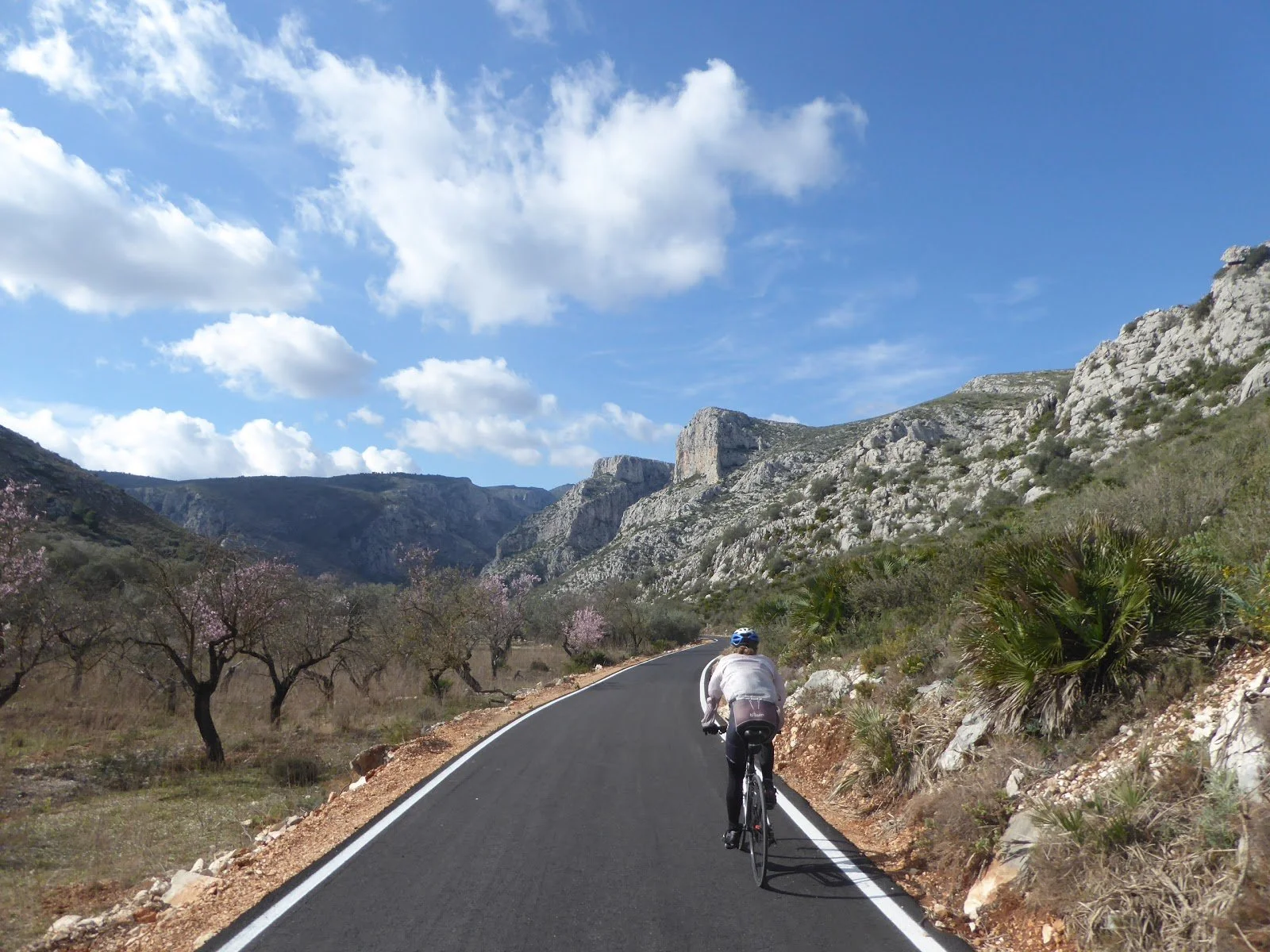
![A cyclist rides on a newly paved road amongst almond trees with mountains and a blue sky in the background]()
Guadalest and Vall d'Ebo loop
139 km · 2.573 m elevation gain.
Two of the Marina Alta's most storied places, connected by a road that asks real questions of the legs before answering with real rewards. Guadalest's castle and turquoise reservoir open the day; Vall d'Ebo's quiet, almond-terraced valley closes it. A loop for riders who want their climbing paired with genuine history and scenery, not just gradient.
-
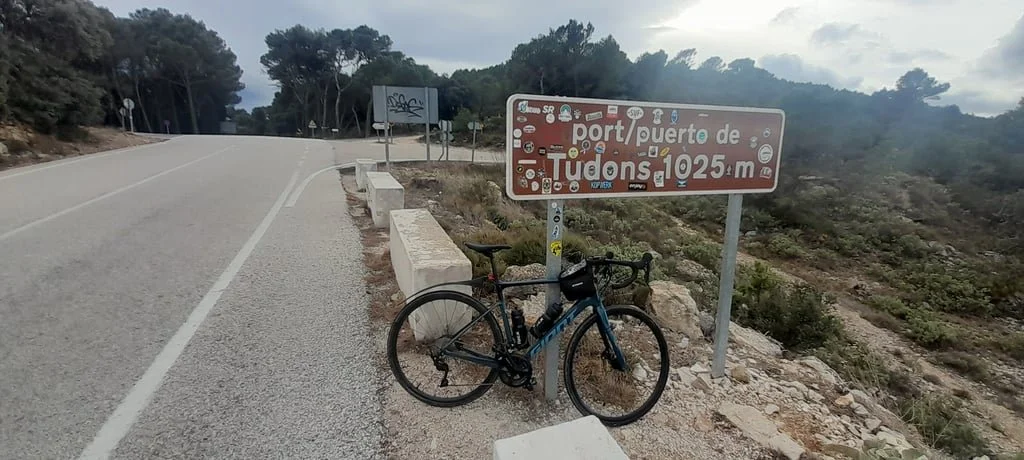
![A bicycle is parked on the side of the road in front of the sign for port de tudons]()
Port de Tudons and Coll de Rates
155 km · 3.348 m elevation gain.
The quieter of the two Vuelta-proven passes joins the region's most famous climb for a loop that builds steadily rather than shocks — Tudons first, testing patience on its lesser-known slopes, then Coll de Rates to finish with a climb every serious rider in the area already knows by name. A route that rewards those who've built real fitness on the routes before it.
-
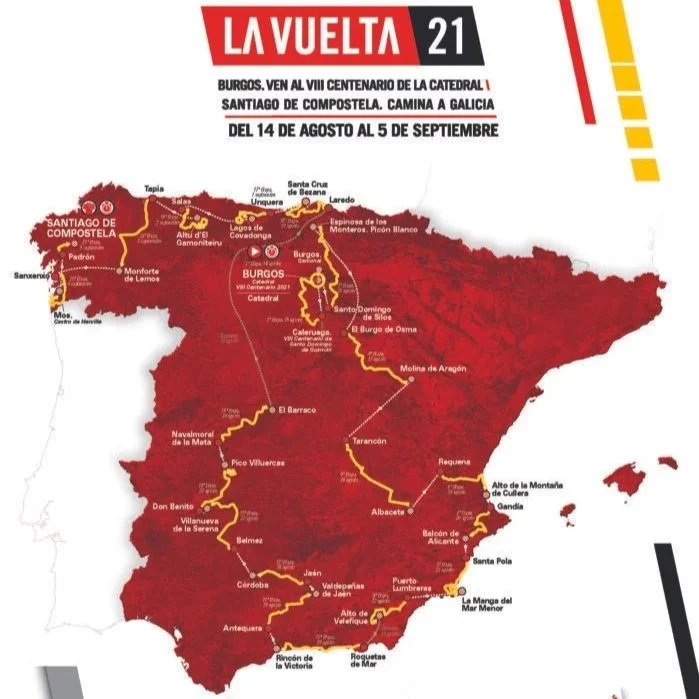
![Red map of Spain showing the stages of the bike race Vuelta de España 2021]()
Vuelta de España 2021, stage 7
153.3 km · 3,725 m elevation gain
Six categorised climbs, bookended by two category-one tests, on a route the pro peloton itself found relentless — up or down from start to finish, with barely a flat kilometre to recover on. The stage climbs right from the off up the Puerto de la Llacuna, a modest-looking 6.4% average that hides a genuinely severe middle section — familiar terrain, since many WorldTour teams use this Costa Blanca region for winter training camps.
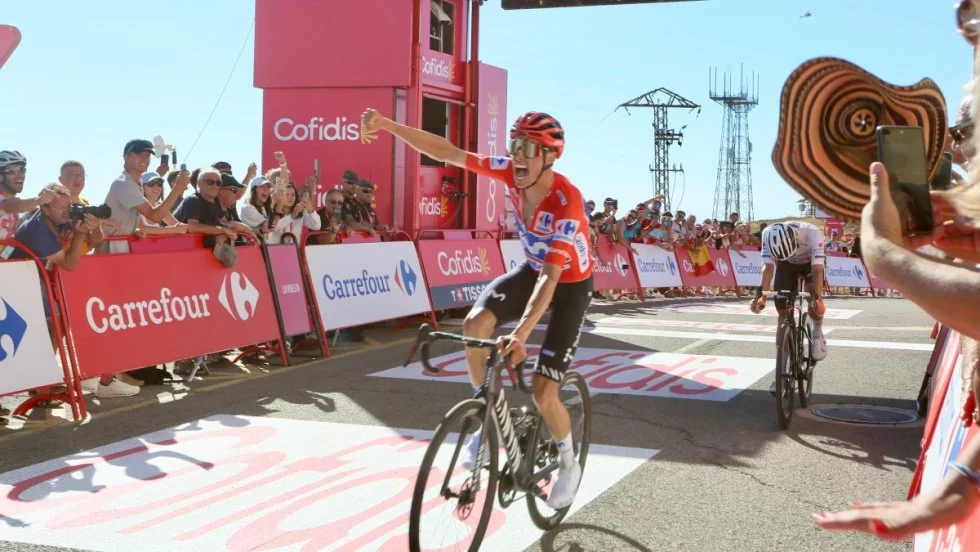
The finale is where this stage earned its reputation: the Balcón de Alicante, an unprecedented Vuelta summit finish at the time, officially 8.4km at 6.2% but with real teeth in its final half, where the road narrows and switches back sharply up the mountainside. In 2021, Michael Storer of Team DSM took the stage, riding clear of his breakaway companions on the steep, narrow final two kilometres to claim his first WorldTour win — while Alejandro Valverde, in his 15th and what would prove his final Vuelta, abandoned after a crash.
A route for riders who've built genuine fitness on the region's other climbs and want to finish where a career-defining stage once did.
-
![Resultattavle for sykkelritt, viser deltakerne og deres lag, tider og plasseringer, med et bakgrunnsbilde av fjell og landsby.]()
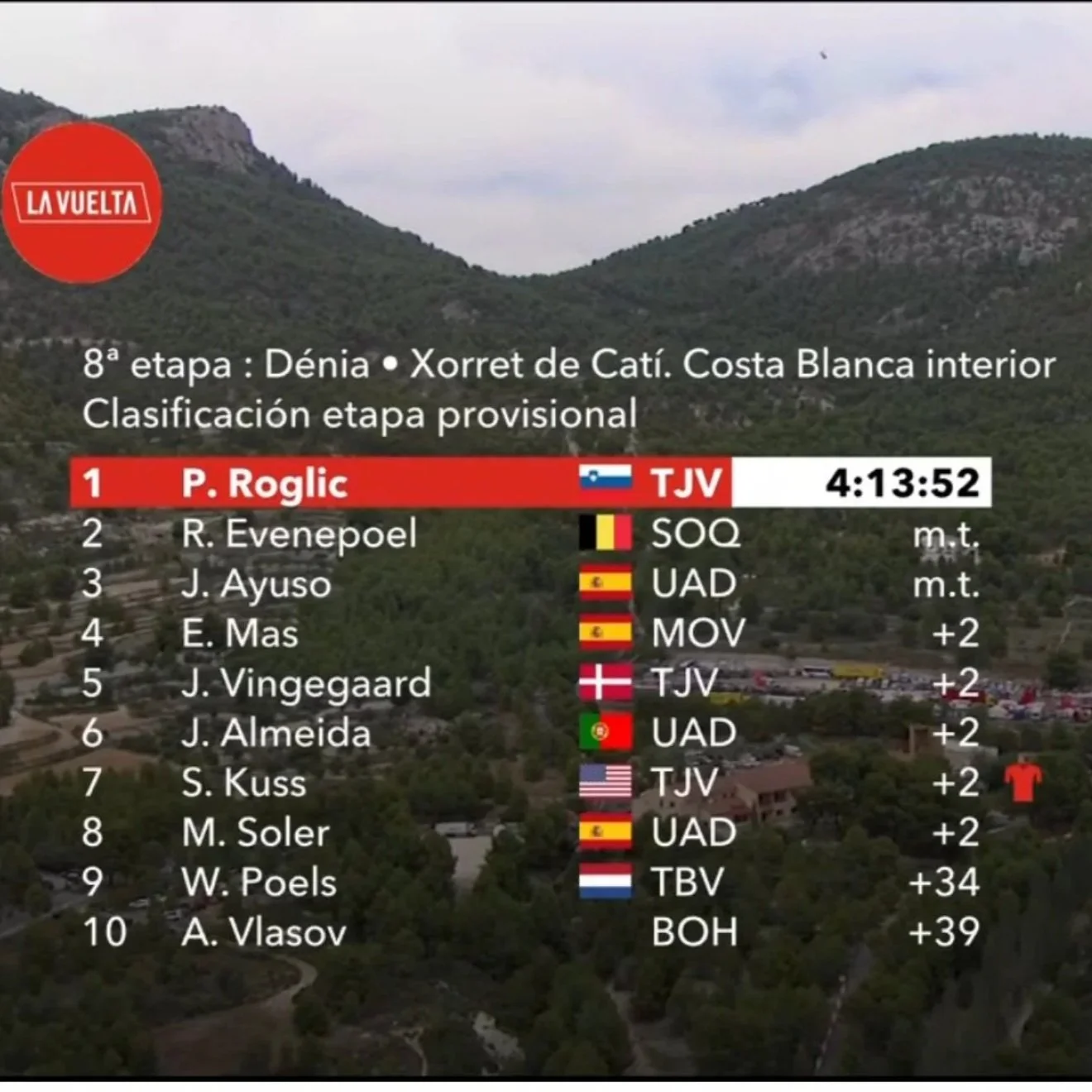
Vuelta de España 2023, stage 8
162.3 km · 3,531 m elevation gain
The first 20km out of Dénia lull you with flat roads before the day turns into a relentless string of climbs — Vall d'Ebo, Puerto de Tollos, Puerto de Benifallim, Puerto de la Carrasqueta — four passes deep before the legs get any rest. Then comes the reason this stage is remembered: the Xorret de Catí, a category-one wall averaging 11.4% with ramps up to 22%. In 2023, Primož Roglič won here outsprinting Remco Evenepoel and Juan Ayuso, and this climb has a long history of separating the genuine contenders from the rest.
For your strongest riders, this is the actual professional stage — climb for climb. A route to save for last.
-
![Professional bike riders participating in the Vuelta de España 2026]()
Vuelta de España. Stage 9 2026
188 km · 5.051 m elevation gain.
For riders who've worked their way through Mirava's Mountain Passes tier, this is the summit of the summit — the Queen stage of the 2026 Vuelta de España. Six categorised climbs stack up across the day, including Tàrbena, Miserat, Tollos, Port de Tudons, and, finally, Aitana. A day that asks everything of the legs and gives back, at the top, one of the widest views the Mediterranean coast has to offer.